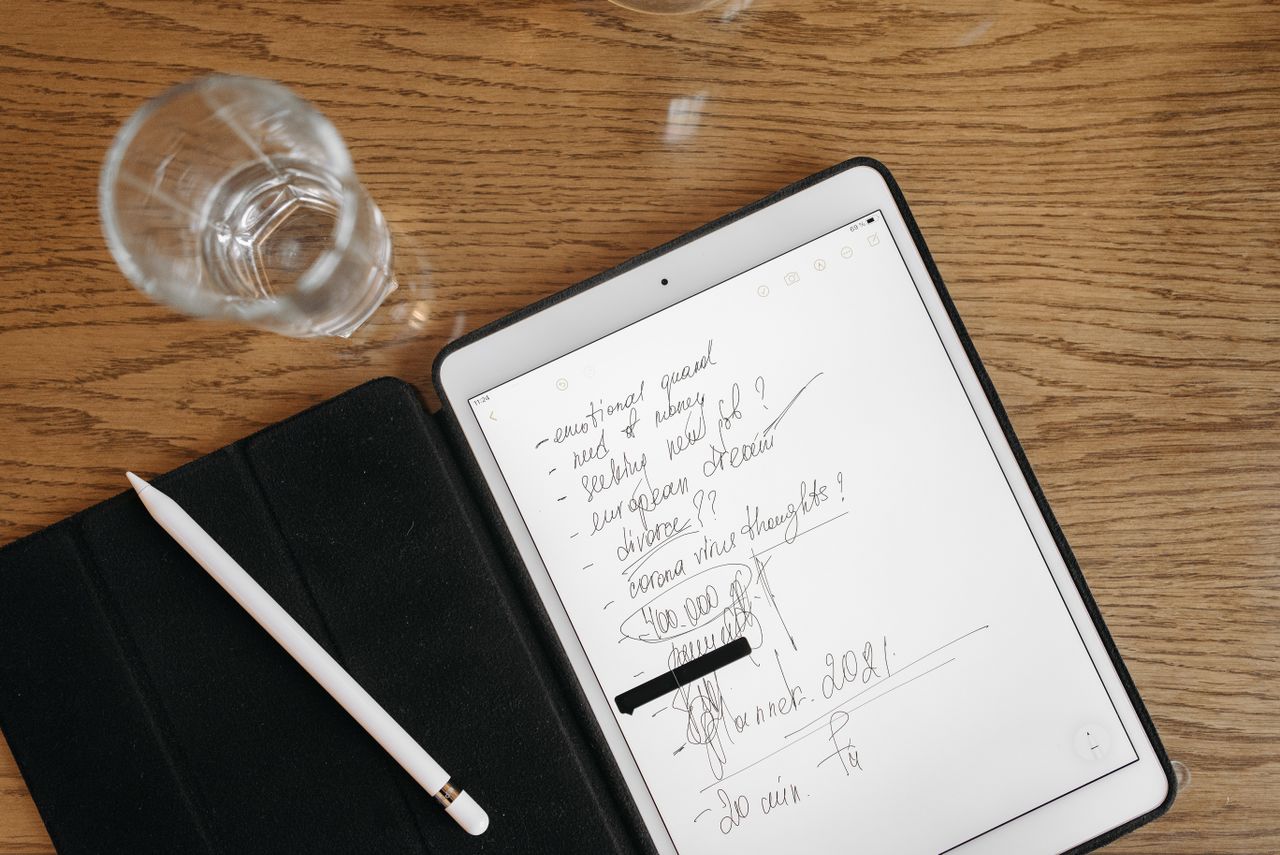
Notes can be a temporary reminder, a working procedure, or the starting point for a longer document. Those purposes do not always need the same application. Before setting up a new note system, inspect a few existing notes. Which ones do you revisit, which become something else, and which stop being useful after a day?
Start with retrieval
Short ideas often need only plain text and a descriptive title. Text is searchable, easy to copy, and readable in many applications. If ordering and indentation matter, a lightly structured text format may help. Check that the meaning remains understandable outside the application where the note was written.
A table is more suitable for repeated fields such as device, model, purchase date, and accessories. It may be too rigid for a conversation whose relationships are still developing. A sketch can explain spatial relationships well, but it is not automatically searchable like typed text. Add a title and the most important terms in text form so the drawing can be found later.
Consider what happens next
If a note will become a report, paragraphs and references should be easy to reuse. Keep your observations distinguishable from direct quotations. A saved link alone may not explain which claim mattered to you. Add a sentence describing the connection and a date when it helps establish context.
For shared notes, consider who should read or edit them. A personal collection does not automatically need to become a team workspace. Use a harmless sample note to test sharing, comments, and export. Include phone use and offline access in the trial if those are part of your actual routine, rather than assuming they will work later.
Try one topic before migrating everything
Use the proposed format for a limited project, such as preparing an event. After a few days, try to retrieve a specific decision. If you have to browse many attractive pages, the problem may be unclear titles or unrelated subjects combined in one note.
Finally, export a note containing an image, link, and several paragraphs, then open it outside the original application. Every color does not need to match, but the content and its relationships should survive. Only then is it worth moving a larger collection into the new format.